How does snowmaking work at a ski resort? – Snow production at Shuttleberg
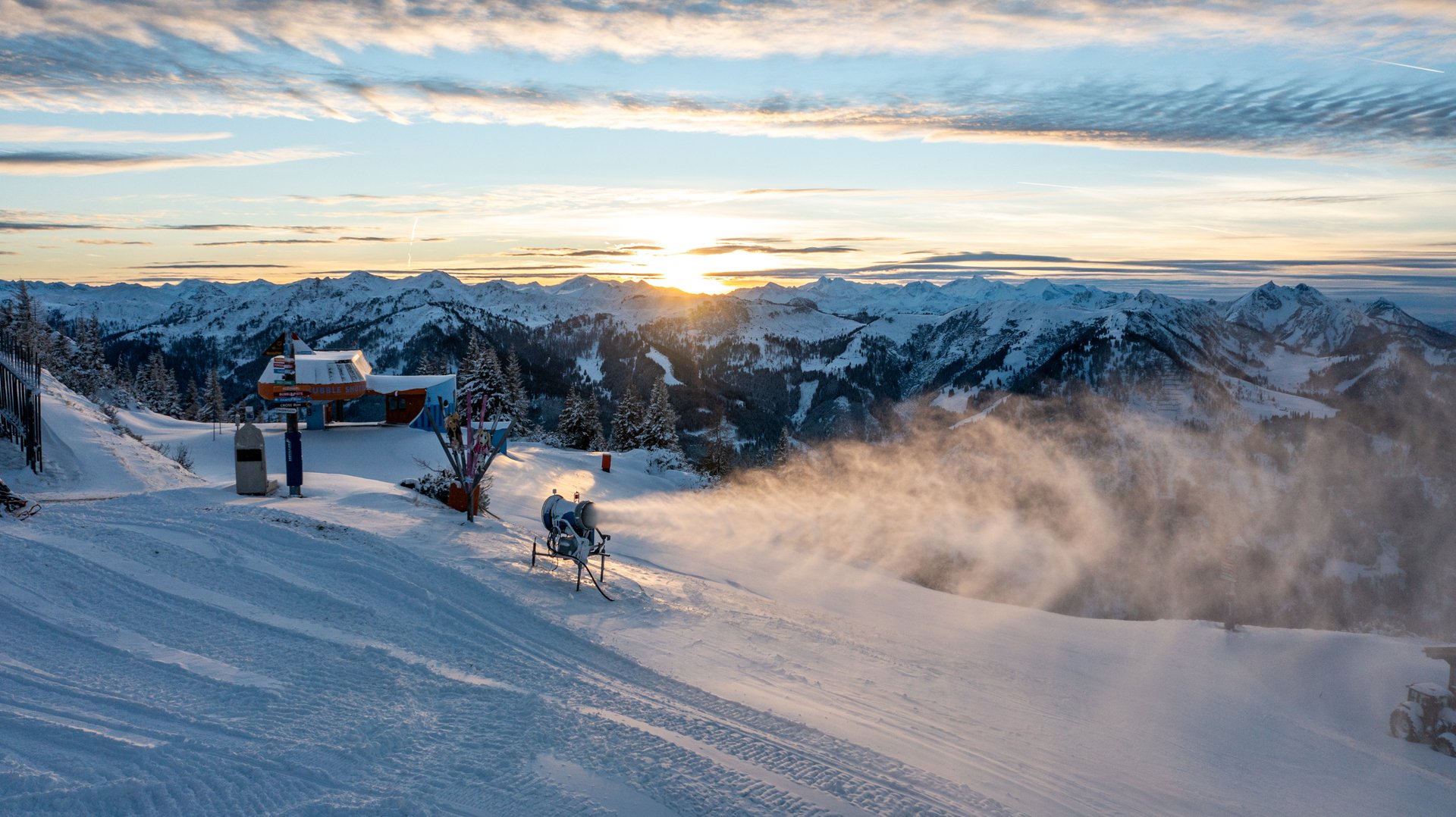
Technical snowmaking produces snow from water and air. Water is sprayed into tiny droplets under pressure, which freeze under suitable temperature and humidity conditions. At Shuttleberg, reservoirs, pumping stations and snowmaking machines supply the slopes. The key factor in determining when snowmaking can begin is not just the air temperature, but above all the wet-bulb temperature.
1. How does snowmaking work at Shuttleberg?

WATER
FROM RESERVOIRS

temperature
WEATHER CONDITIONS
 TECHNOLOGY
SNOWMAKING MACHINES & PUMPS
01 – Water Storage
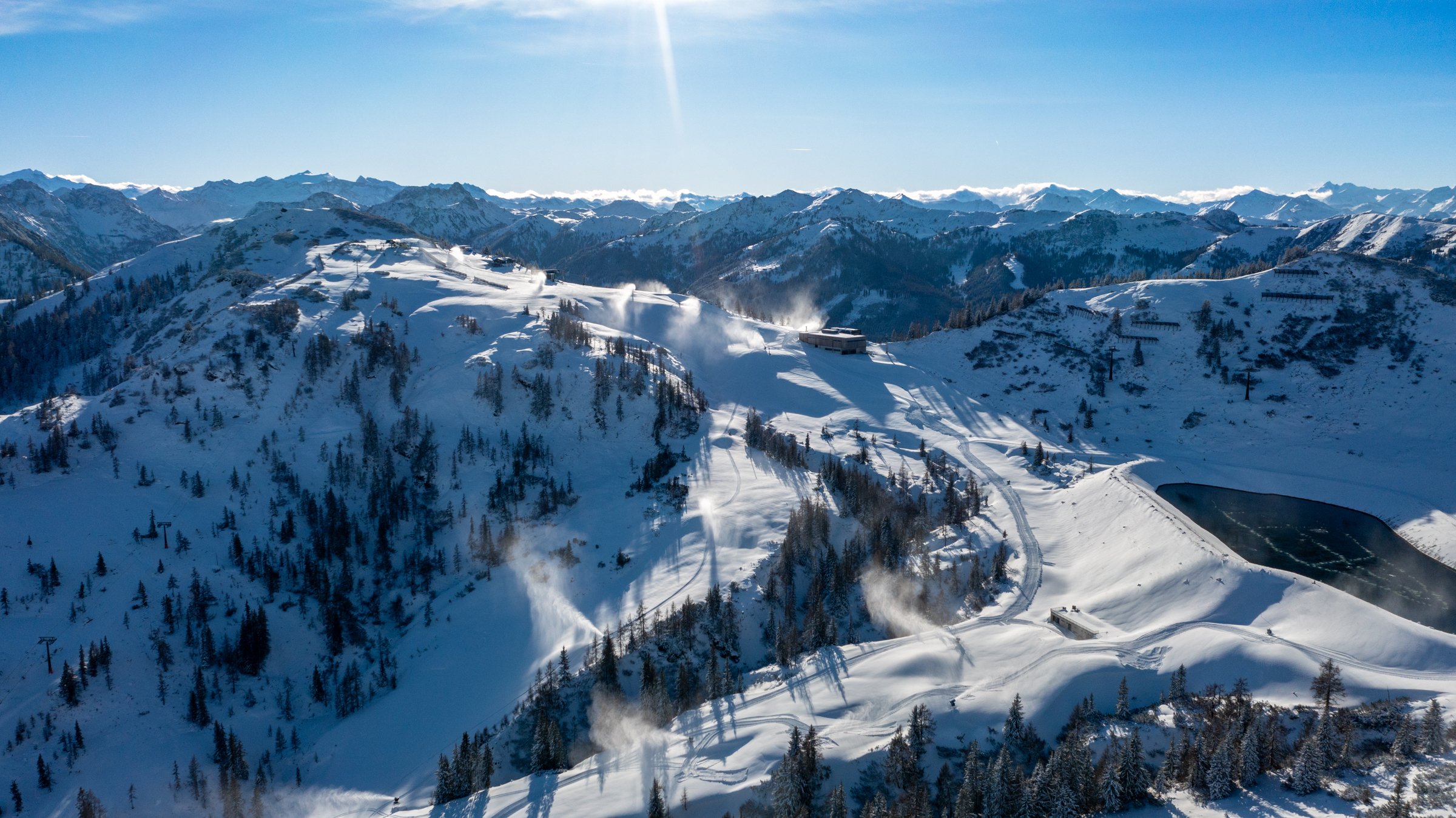
The water supply is the foundation of technical snowmaking. At Shuttleberg, three reservoirs have a total capacity of around 250,000 m³ of water. They provide the water needed for snow production.
02 – Wasser transportieren
Pumpstationen und Leitungen transportieren das Wasser zu den Schneeerzeugern. Durch die Höhenlage des Speicherteichs Himmelleitboden auf rund 1.800 Metern kann der natürliche Druckunterschied genutzt werden, um tiefer gelegene Pisten mit Wasser zu versorgen. Dadurch lässt sich zusätzliche Pumpenergie einsparen.
03 – Technischen Schnee erzeugen
Schneekanonen und Schneilanzen zerstäuben Wasser in feinste Tröpfchen, die bei geeigneten Temperatur- und Luftfeuchtigkeitsbedingungen zu Schnee gefrieren. Entscheidend ist dabei die sogenannte Feuchtkugeltemperatur, die beide Faktoren berücksichtigt.
04 – Pisten präparieren
Nach der Schneeproduktion wird der Schnee mit Pistenraupen verteilt und präpariert. So entsteht eine möglichst gleichmäßige und belastbare Schneeunterlage für die Pisten und Spezialpisten am Shuttleberg.
2. What is needed to produce technical snow?
Several factors must work together to produce snow:
- Water: It is transported through pipes to the snowmaking machines.
- Temperature and humidity: They determine the conditions under which the water droplets can freeze.
- Pressure: It enables the water to be transported and finely atomised.
- Snowmaking machines: Snow cannons and snow lances turn the water into snow.
- Experience and planning: Snowmaking technicians adjust operations to the prevailing weather conditions.
At Shuttleberg, snowmaking uses only air, water and pressure. No chemical or biological additives are required.

3. How does Shuttleberg manage water and energy?
To ensure efficient snowmaking, Shuttleberg relies on modern technology. Atmospheric cooling systems help cool the water with low energy consumption and without artificial refrigerants. Filtration and UV treatment systems ensure that the snowmaking water meets at least bathing water quality standards.
Meltwater is collected in the three reservoirs for snow production. Where the infrastructure allows, the natural difference in elevation between the reservoirs and the snowmaking machines helps supply the water. This can reduce the need for additional pumping power.
After the snow melts, the water returns to the natural water cycle.

4. Facts & Figures
| Water | 70% from meltwater stored in reservoirs, 30% from streams |
|
Snowmaking reservoirs |
3 |
|
Water in the reservoirs |
100% meltwater |
|
Total storage capacity |
Around 250,000 m³ |
| Pumping stations | 3 |
| Snowmaking technicians | 9 |
| Cooling systems | Atmospheric cooling systems without artificial refrigerants |
| Electricity supply | 100% green electricity (Salzburg AG) |
| Snowmaking machines | More than 200 |
| Snowmaking machine brands | DemacLenko (Italy), TechnoAlpin (Italy), Bächler (Switzerland), Supersnow (Poland) |
5. Frequently Asked Questions About Snowmaking
How is technical snow produced?
Water is finely atomised under pressure. Under suitable temperature and humidity conditions, the droplets freeze to form snow.
What is technical snow made of?
Technical snow consists of water and air, just like natural snow. No chemical additives are required.
At what temperature can snowmaking take place?
This depends not only on the air temperature but also on humidity. The decisive factor is the wet-bulb temperature. This is why not all sub-zero temperatures are equally suitable for snow production.
What is the wet-bulb temperature?
The wet-bulb temperature indicates how much air can cool through evaporation. It takes two factors into account: air temperature and humidity. This is important for snowmaking because how quickly water freezes depends not only on temperature but also on the humidity of the surrounding air.
Where does the water for snowmaking at Shuttleberg come from?
More than 70% of the water used for snowmaking comes from reservoirs filled exclusively with meltwater. The remaining water is drawn from streams at Shuttleberg under strict hydroecological requirements.
Are additives used in snow production?
No. Snowmaking at Shuttleberg uses only air, water and pressure. Chemical or biological additives are not required.
How does Shuttleberg save energy in snowmaking?
Among other measures, Shuttleberg uses the natural pressure difference between reservoirs at higher elevations and slopes at lower elevations. In addition, coordinated snow production and atmospheric cooling systems help ensure efficient energy use.
How many snowmaking machines are there at Shuttleberg?
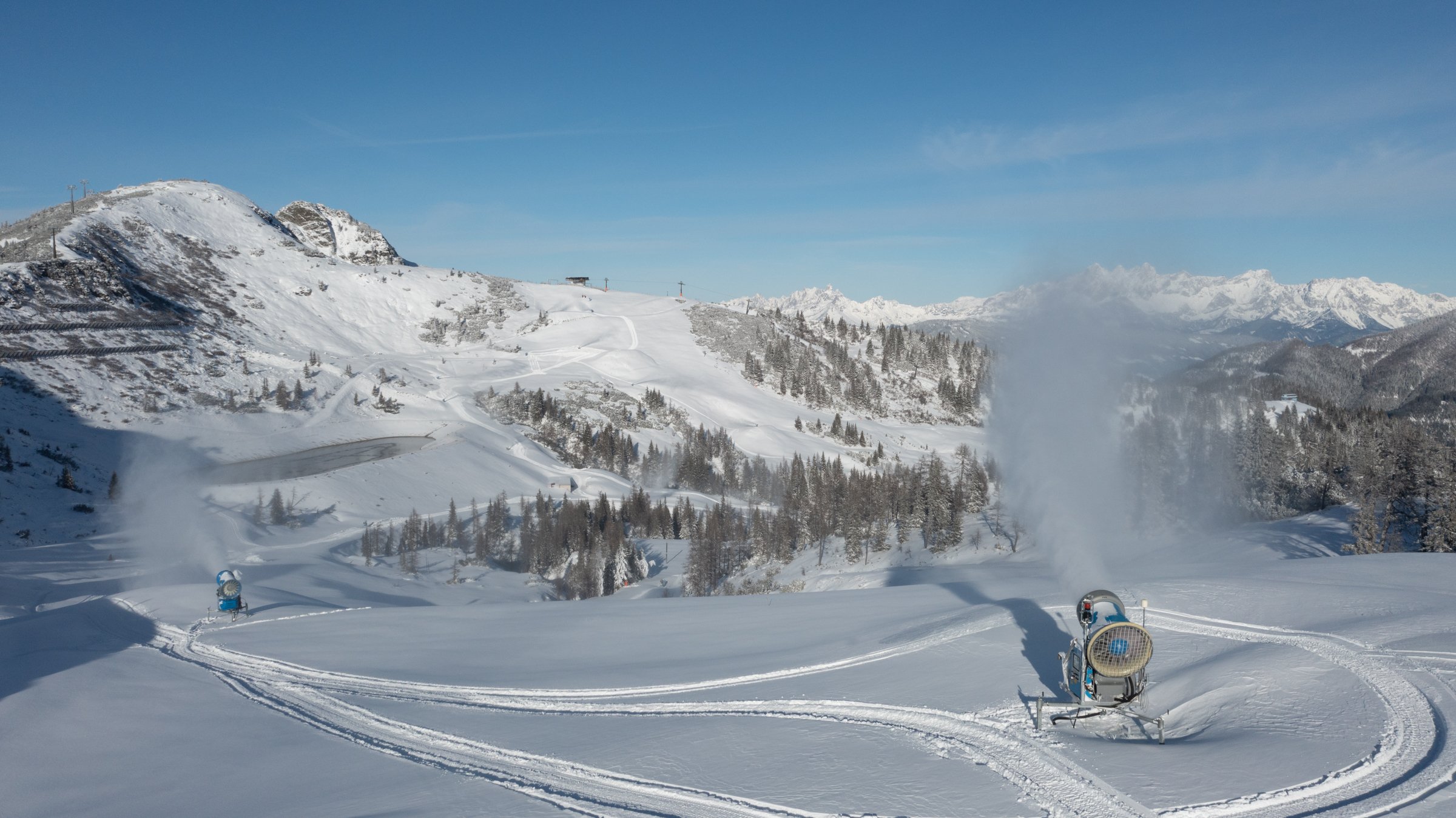
More than 200 snowmaking machines are in operation at Shuttleberg, including snow cannons and snow lances.
Why is technical snowmaking important for a ski resort?
Modern snowmaking systems help build a sufficient base of snow for ski operations when weather conditions are suitable. The amount of snow that can be produced depends on the weather, water availability and technical infrastructure.
Plane deinen Aufenthalt!
Finde die passende Unterkunft und sichere dir dein Skiticket bequem online. So bist du bestens für deinen Skitag vorbereitet.